

introduction
Your first investor email lands: “We’d like to send you a term sheet.” Your heart races, and then you open a two-page document full of phrases like “liquidation preference” and “pro rata rights”. Understanding what a Startup Term Sheet is, and what to look for in it can decide how much of your company you keep and how much control you retain for years. It is short, but it is the most important document of your fundraising journey. This guide breaks down what a term sheet is, which clauses matter most, and how founders can negotiate with confidence.
What Is a Startup Term Sheet?
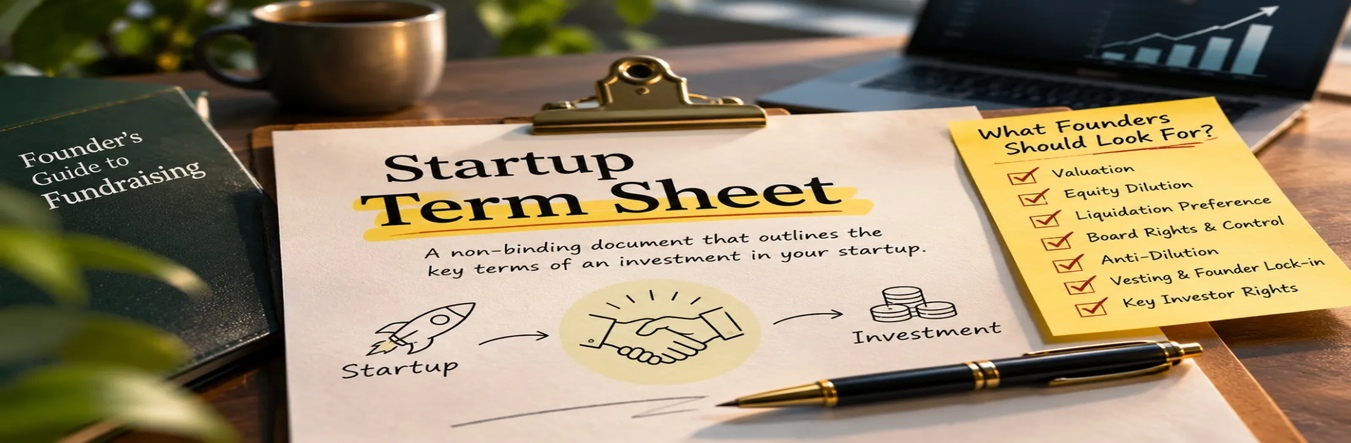
A startup term sheet is a short, usually non-binding document that outlines the key terms of an investment before lawyers draft the final agreements. Think of it as a blueprint: it sets out the valuation, the amount being invested, the rights investors receive, and the conditions for closing. Unlike a pitch deck, which sells your vision, a term sheet reflects what investors are willing to commit. Most term sheets are one to five pages long. While the detailed contracts come later, almost every major point is settled here, which is why founders should treat it as seriously as the final deal.
Why a Term Sheet Matters for Founders
Once a term sheet is signed, renegotiating becomes awkward. Investors have invested time and reputation, and walking back agreed points can damage trust. Meanwhile, other investors may pause their conversations with you because of exclusivity clauses. That makes the period before you sign your most powerful moment. Understanding the terms early protects your ownership, your decision-making power, and your future funding rounds.
Key Terms in a Startup Term Sheet: What Founders Should Look For
1. Valuation and Investment Amount
Pre-money valuation is what your company is worth before the investment; post-money adds the new capital. Together with the investment amount, these numbers determine the percentage you give away. A higher valuation looks attractive, but check what you are trading for it. An inflated valuation paired with harsh terms can hurt you more than a lower, cleaner offer.
2. Liquidation Preference
This clause decides who gets paid first when the company is sold or shut down. A 1x non-participating preference is the founder-friendly standard: investors take either their money back or their share of proceeds, not both. Be cautious of participating preferences or multiples above 1x, which let investors collect twice.
3. Board Composition and Control
Who sits on the board shapes who makes the big decisions. Early on, founders should aim to keep board control or at least balance. Review protective provisions too: these are veto rights investors hold over actions such as selling the company, issuing new shares, or changing the business plan. A few are normal; a long list can hand away day-to-day control.
4. Anti-Dilution Protection
Anti-dilution clauses protect investors if you later raise money at a lower valuation. Broad-based weighted average is the common and fair approach. Full ratchet is far more aggressive and can slash founder ownership in a down round, so push back on it.
5. Vesting, ESOP, and Option Pool
Investors often require founder vesting, typically four years with a one-year cliff, to ensure commitment. They also ask for an employee stock option pool, usually created before the investment, which dilutes existing shareholders rather than the new investor. Always model how a larger pool affects your effective valuation.
6. Exclusivity and Other Clauses
Most term sheets include a no-shop clause that stops you from talking to other investors for 30 to 60 days. Keep this window short. Also review pro rata rights, drag-along and tag-along provisions, information rights, and conditions precedent such as due diligence results.
Term Sheet Red Flags vs. Founder-Friendly Terms
Term | Founder-Friendly | Red Flag |
Liquidation preference | 1x non-participating | Participating or multiple above 1x |
Anti-dilution | Broad-based weighted average | Full ratchet |
Board | Founder majority or balanced | Investor-controlled early on |
No-shop period | 30 days or less | 90 days or open-ended |
Protective provisions | Short, standard list | Long list covering daily decisions |
How to Review and Negotiate Your Startup Term Sheet
A term sheet is a conversation, not an ultimatum.
- Compare, don’t just accept. Multiple offers give you leverage and perspective.
- Model your cap table. See how each clause changes your ownership after this and future rounds.
- Prioritise. Pick two or three terms that truly matter instead of fighting every line.
- Ask questions. Good investors explain their reasoning; evasiveness is itself information.
- Mind the timeline. Offers often carry expiry dates; ask for a reasonable extension if you need time to compare.
- Get legal advice. An experienced startup lawyer is worth every rupee at this stage.
Not sure where you stand? Read our guide on how to get venture capital funding for your startup, and explore Marcquity’s legal and compliance support and financial and fundraising support before you sign.
What Happens After You Sign the Term Sheet?
Signing triggers due diligence, where investors verify your financials, legal records, product, and team. Make sure the legal documents every startup needs are organised, because gaps found now can delay or derail the deal. After due diligence, lawyers draft the definitive agreements, such as the share subscription agreement and shareholders’ agreement. Once both sides sign and conditions are met, funds are transferred and the round closes. The whole journey from term sheet to money in the bank usually takes four to eight weeks.
Common Term Sheet Mistakes Founders Make
Avoid these frequent traps:
- Focusing only on valuation while ignoring control and preference terms
- Signing without modelling the cap table
- Accepting a long exclusivity period out of excitement
- Skipping legal review to save money
- Not understanding clauses but being too embarrassed to ask
Conclusion: Know Your Term Sheet Before It Knows You
A startup term sheet is far more than a formality. It defines your ownership, your control, and your relationship with investors for years to come. Founders who read every clause, model the numbers, and negotiate calmly end up with partners who add value rather than friction. Marcquity is a hybrid incubator and venture platform that supports startups from ideation to scaling. Learn about our venture capital investing and mentoring and advisory services, or contact Marcquity to get investor-ready before your next term sheet arrives.
Frequently Asked Questions
What is a startup term sheet in simple words?
It is a short, mostly non-binding summary of the main investment terms, such as valuation, amount, and investor rights, agreed before the final legal contracts are drafted.
Is a term sheet legally binding?
Generally no, except for certain clauses like confidentiality and exclusivity. The investment itself becomes binding only when definitive agreements are signed.
What is the most important clause in a term sheet?
Valuation gets the attention, but liquidation preference, board control, and anti-dilution often shape founder outcomes more. Look at the whole package, not one number.